
VINTAGE EL CLAVEL – ROUTE REPORT

by Anthony Preston

11th February 2026

Having briefly visited Northern Spain in July 2025 to meet with hotels and key venues, Route Coordinator for the Vintage El Clavel, Anthony Preston, returned to the region in December for the main route recce. For most of this trip, he was accompanied by Mark Appleton and together they surveyed the whole route to put everything in place. Following their return, here are updated details about the event and the route each day:

As previously outlined, activities for the event commence with Scrutineering and Documentation during the afternoon of Sunday 13 September at the Blau Gran Hotel Las Caldas, just south of Oviedo. In the evening, a drinks reception followed by the traditional Welcome Dinner gets the all-important social side of the event underway.

The Belle Époque architecture of the Las Caldas resort gives a clue that visitors have been ‘taking the waters’ here since the late 18th Century. However, this historical heritage has been integrated with modern amenities to provide a top class spa resort. The village of Las Caldas itself is a tranquil spot with a couple of traditional bars and restaurants plus easy access to the surrounding countryside for a spot of walking or cycling.

The next morning, the first car will be flagged off at 08:30 for a short run to the initial Regularity. This straightforward section should get you into groove while still showing off the fine scenery of the Asturian Mountains as it traces its sinuous path along wooded slopes and through a few traditional villages, complete with their characteristic Horreos (elevated granaries).

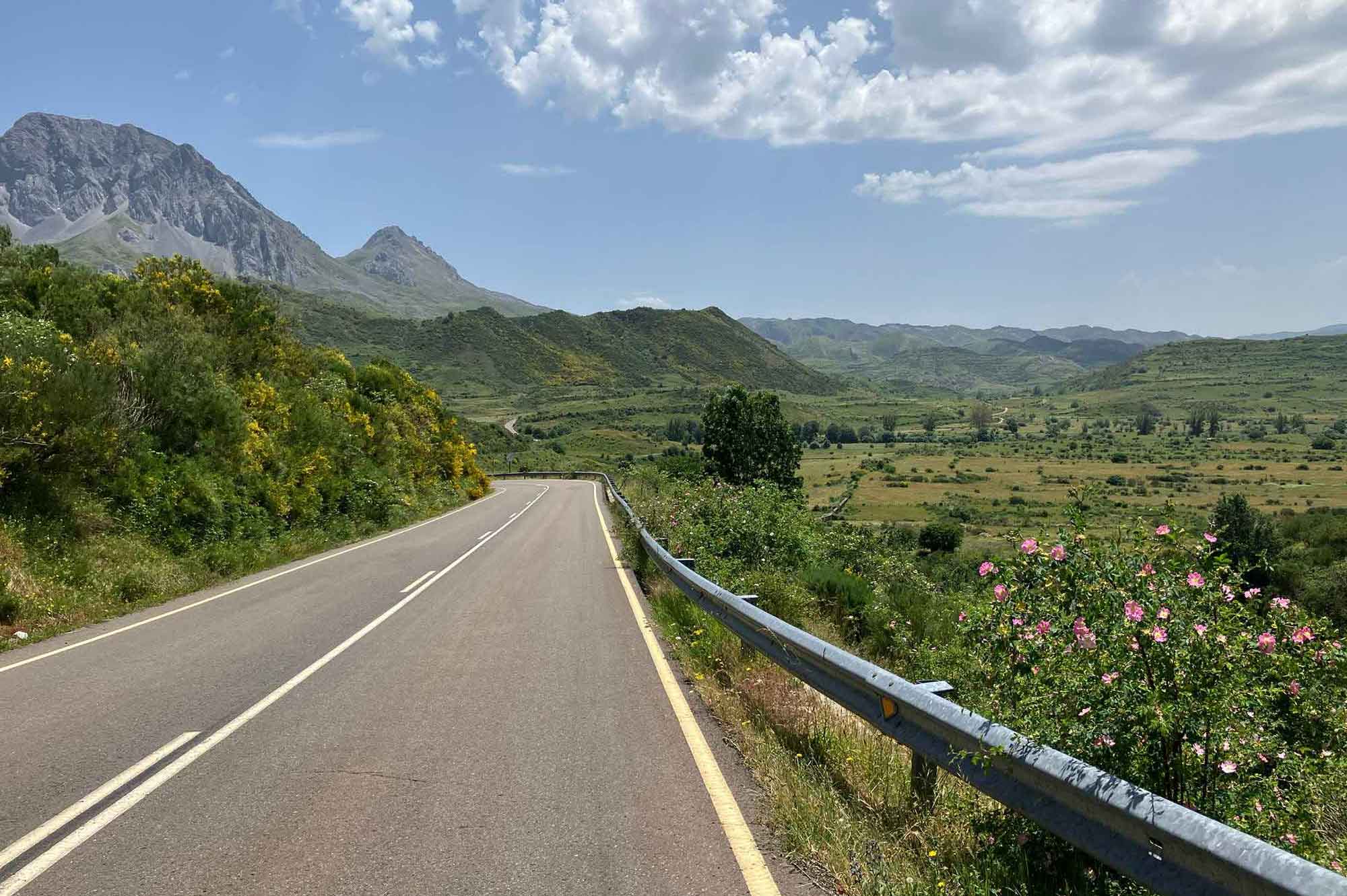
Descending into an impressive gorge, we follow this south alongside hikers and cyclists on the Senda del Oso (Bear’s Path) rail trail to Entragu. We then begin a long climb into the Cordillera Cantábrica to reach one of the highest points of the week at nearly 1600m a.s.l. Once over the summit, the scenery significantly changes as the large vistas of Castilla y León open up in front of us and the coastal greenery is replaced by the more characteristic aridity of the Meseta.

Easy valley roads stretching across these big landscapes quickly transport us into the former mining regions around Villablino for the morning refreshments stop and the first Test. Further easy valley driving brings us down to Ponferrada and a second Test for the morning. It is then just a short hop to lunch in a traditional building that was an old pilgrims’ hospital in the 17th Century. In fact, you are likely to see plenty of modern day peregrinos on the Camino Frances headed to Santiago.
We take our leave from the Camino (for now anyway…) to head south to a second hilly Regularity which then precedes a main road run down the Sil valley into Galicia. Climbing away from the river on a ‘primitive’ tarmac road, we reach the afternoon refreshments halt in a roadside bar and this is quickly followed by the third longer Regularity of the day, which has a bit of everything in it. This includes a few short stretches of gravel. Throughout the event, similar short unsurfaced sections will be used ‘here and there’ but in total these probably only add to up to around 5 km.

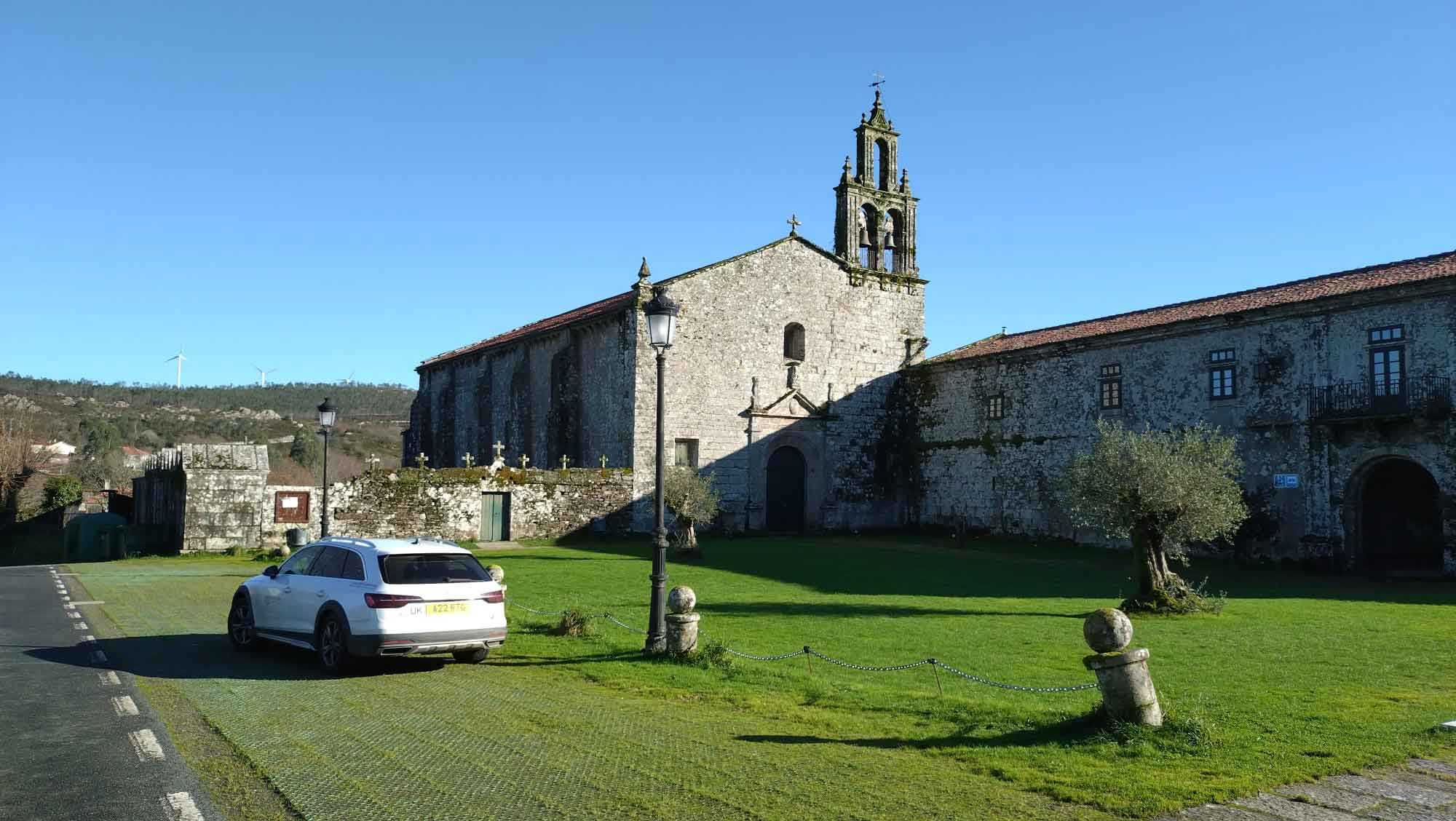
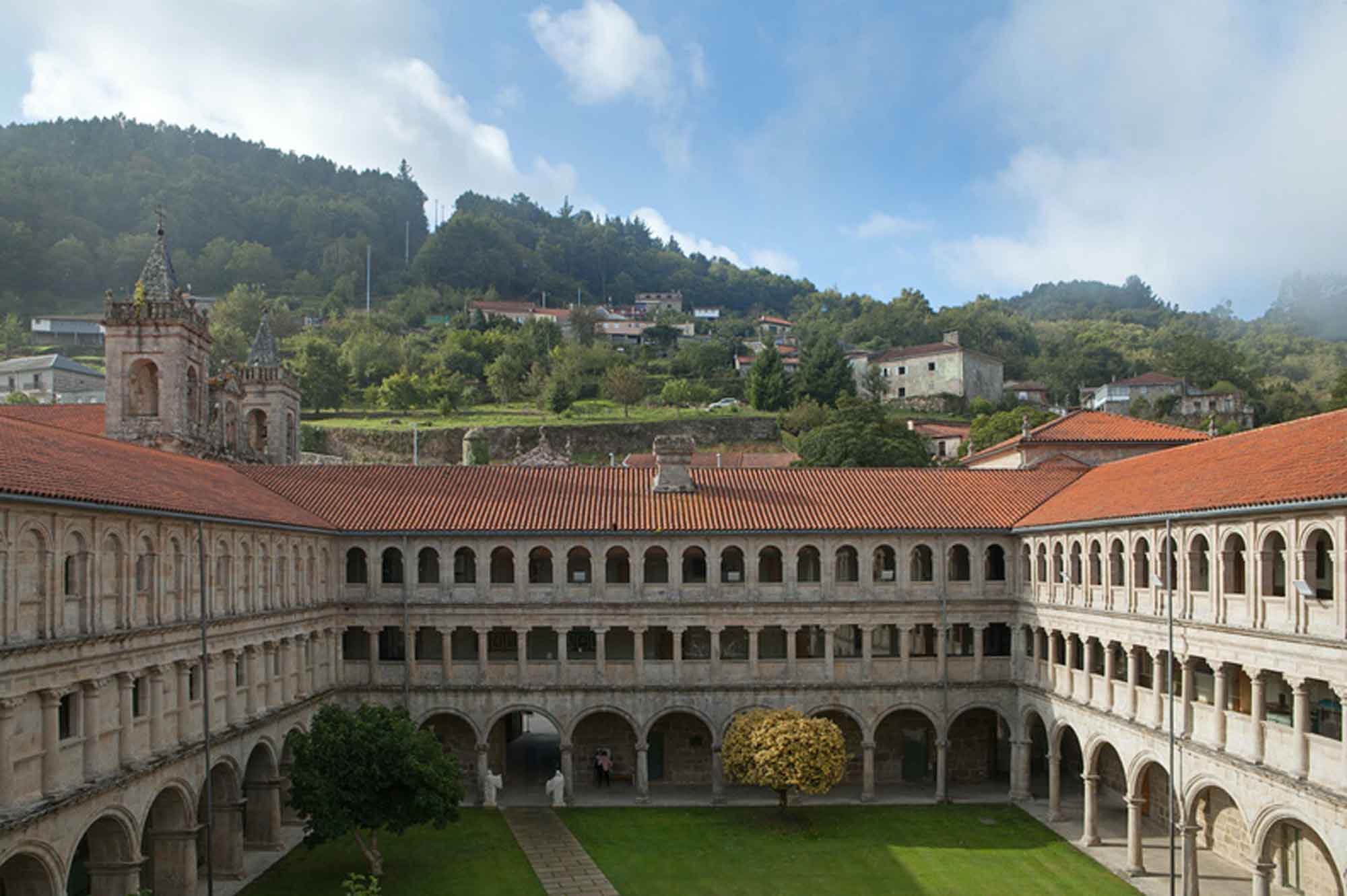
This section finishes close to the little town of Castro Caldelas, which heralds our arrival in the beautiful Ribeira Sacra area and the final drive of the day wends its way through the renowned hillside vineyards of this region, overlooking the impressive Cañón do Sil. Our hotel for the night is the Parador de Santo Estevo – a former Benedictine monastery dating back to the 10th Century, and boasting three impressive cloisters: one Romanesque, one Gothic and one Renaissance. The rooms are in what used to be the monks’ cells but you can be reassured that they are now renovated to the usual Parador standards.

Day Two sees us briefly backtracking before taking a sinuous descent down into the Cañón do Sil to follow the river west to Os Peares. Here we quickly ascend back into the hills surrounded by some impressive (or daunting) feats of concrete engineering holding back the waters of the Minho river to reach the first Regularity. This section continues the climb before opening out into rolling farmland and a similar terrain accompanies us to the first circuit Tests of the day, separated by a quick refreshment halt. We visited this venue on the Carrera España back in 2022, but the track has recently been extended to give a much longer challenge, which you get to tackle twice.

After a cross-country drive, we are back into the hills again, namely the Serra do Suído and the Montes do Testeiro, which host the next Regularity combining one or two driving challenges with far reaching vistas. Similar good driving roads then guide us north to a second planned circuit visit of the day, where a slightly different Test is planned on this flowing track.

Having enjoyed a busy morning of competition, suitable rest and revitalisation will be provided by way of lunch in a 12th Century Cistercian monastery based hotel. And then, it is straight back into the action with a short Regularity starting from just outside the monastery and wending its way back to the circuit for a second more traditional Special Test.

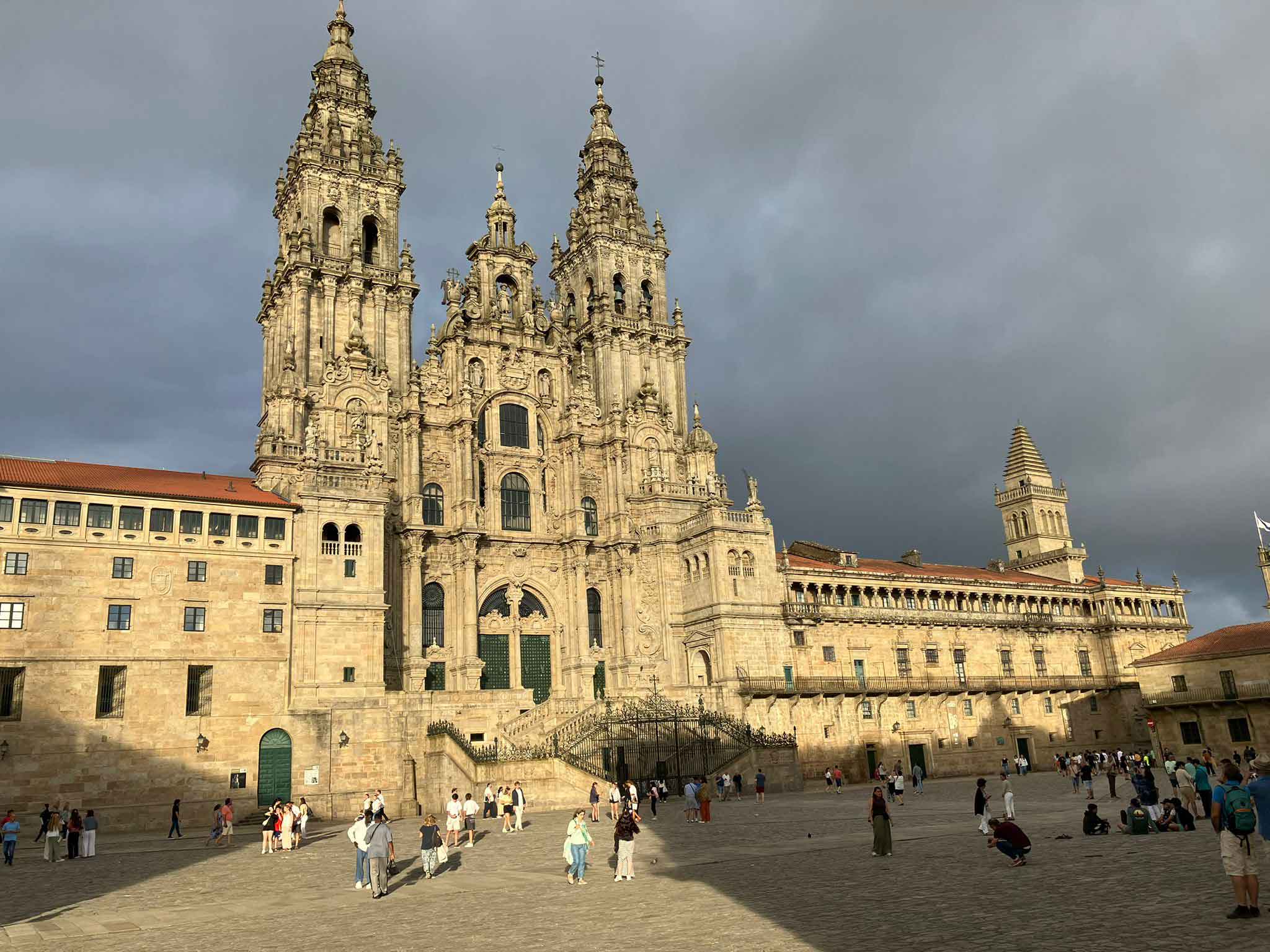
All that remains is a longer Regularity in the network of rural byways to the east of A Estrada to round off the day’s competitive motoring. Then we can ease back as we enjoy a relaxed cross country run to Santiago de Compostela, our home for the next two nights. As well as being a welcome sight for weary peregrinos reaching the end of their ‘Camino’, Santiago is a UNESCO World Heritage Site centred around the impressive cathedral (consecrated in 1211) and nearby Old Town featuring narrow, granite-paved streets, historic buildings, and bustling squares. The city is also well known for its famous almond-based Tarta de Santiago. Our hotel is the NH Collection Santiago, a modern 5* hotel set in quiet parkland, just to the north of the city centre.

Wednesday, Day 3, will be a welcome ‘loop day’ where you can leave the bags in the room and look forward to an earlier finish, with a chance to explore Santiago in the evening as this is a ‘free dining’ night. Before that, there is still a decent amount of rallying to enjoy as we head west from Santiago to explore the rugged landscapes of coastal Galicia.

Leaving the city, we have planned a route that should hopefully not have many traffic queues and we use a section of motorway to further ease progress towards the start of the first Regularity. This section enhances the ‘loop’ theme for the day as it encompasses a circular route on small roads to the east of Noia.

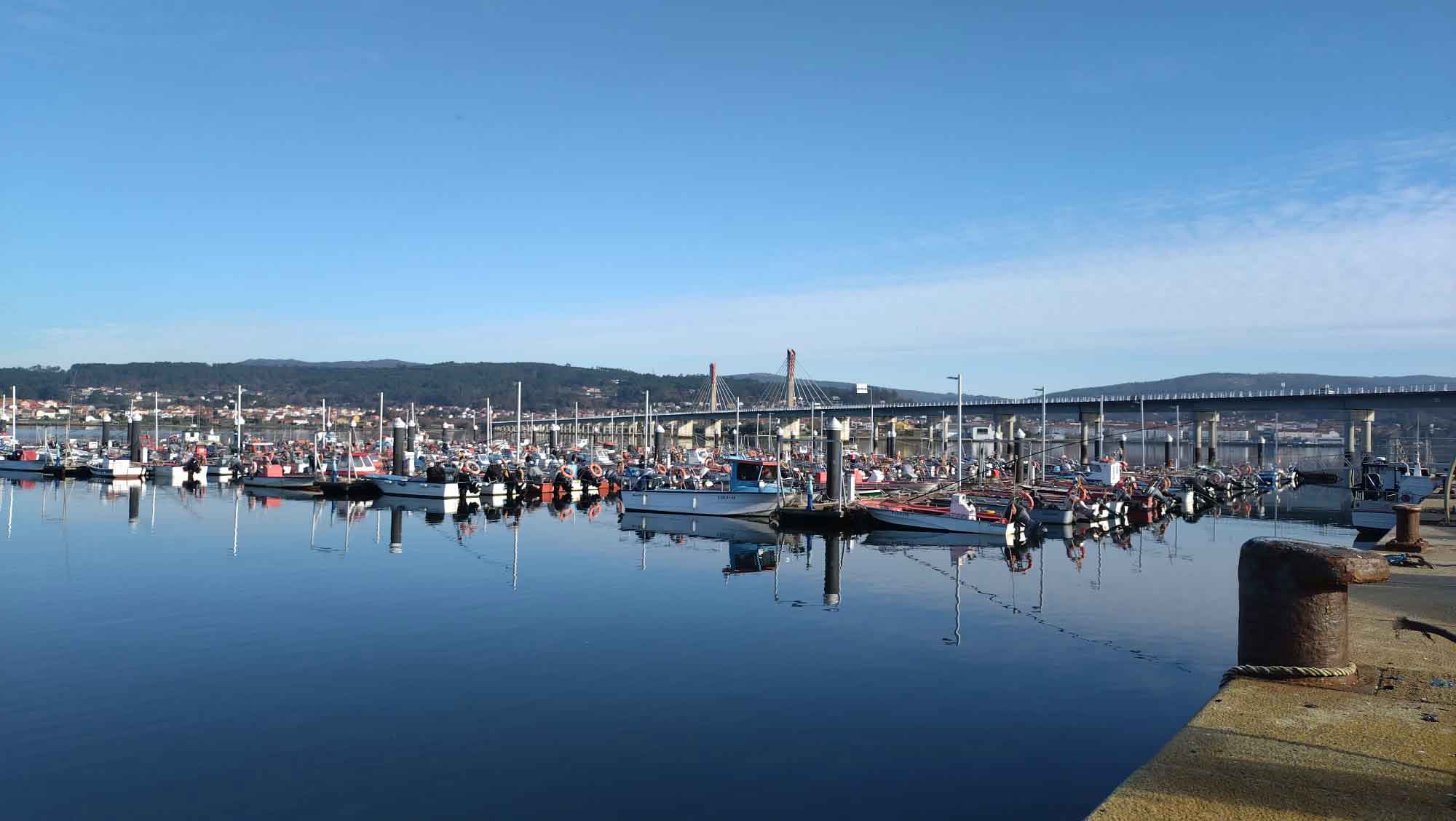
We then bypass Noia itself on a series of sweeping bridges that cross one of the Rias (long, narrow inlets) that characterise the Galician coastline.  On the far banks of this particular inlet, we stop for morning refreshments before heading into the hills. Climbing ever higher, quick glimpses of the coast below are seen through the trees before we emerge onto ‘Wind Turbine Ridge’ offering more interrupted vistas. Under the mighty bulk of the gently swooshing blades, we commence the second Regularity which zigzags its way towards Ézaro.

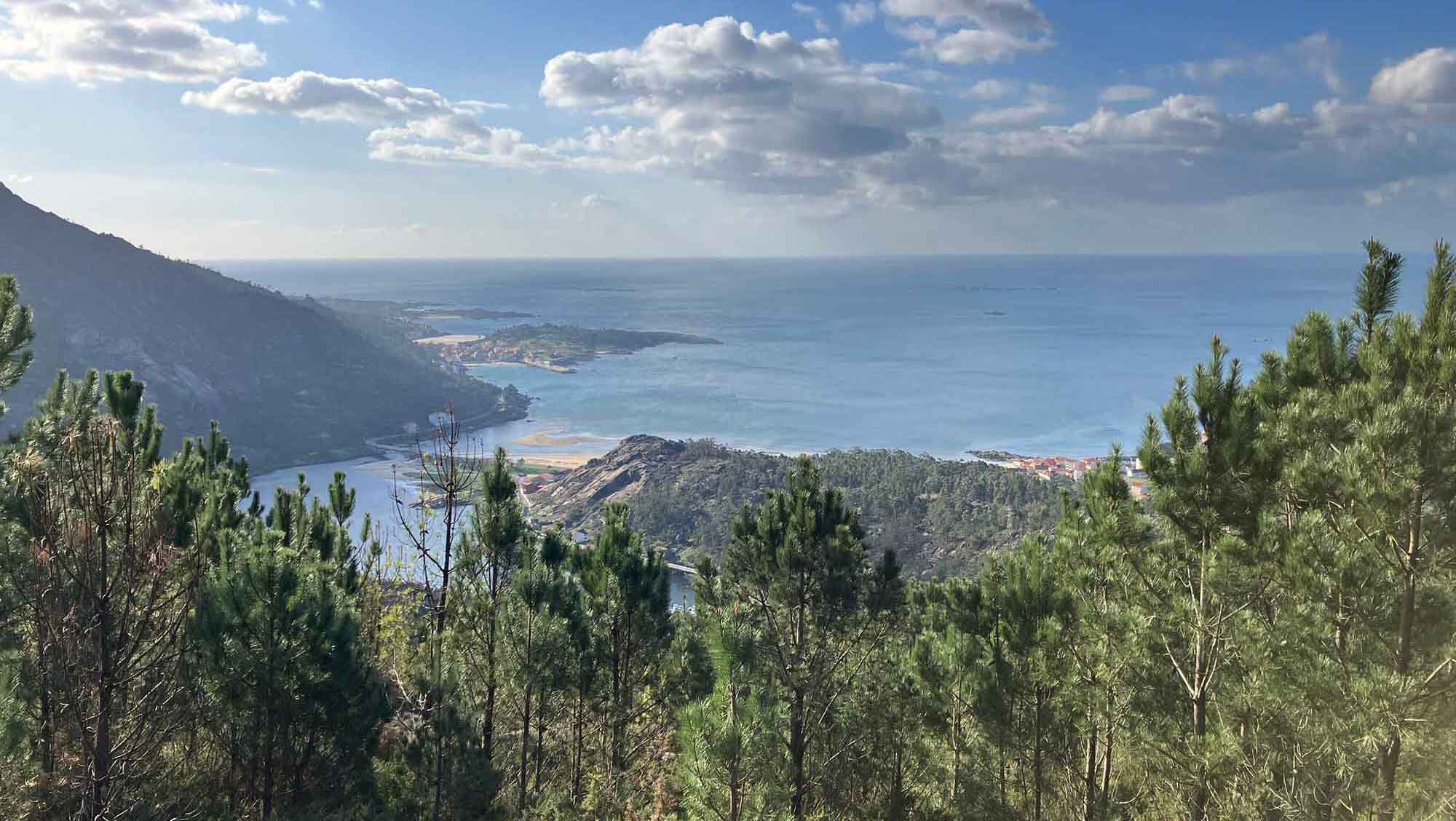
The scenery from the mirador here is impressive but we will leave you to discover its unique qualities for yourself. One interesting feature to note is that the Ézaro Waterfall is the only waterfall in Europe that flows directly into the sea. As you are descending to the coast, you might also spare a thought for La Vuelta a España cyclists who have to suffer when tackling this corkscrew of tarmac in the opposite direction. It is one of the steepest climbs in professional road cycling, with gradients up to 30%.

Looking across the bay on the next road section, you will see a large bulk of land extending into the Atlantic Ocean. This is the Cabo Fisterra – literally the ‘End of the Earth’ or so the Romans believed. We did look to incorporate a quick visit, but it did not easily fit in with the plans. Instead, we make for the scenic but darkly titled Costa da Morte. The name derives from the many shipwrecks that have occurred along this coast over the centuries as ships on the local busy maritime routes have lost the battle with numerous winter storms and the unforgivingly jagged shoreline.

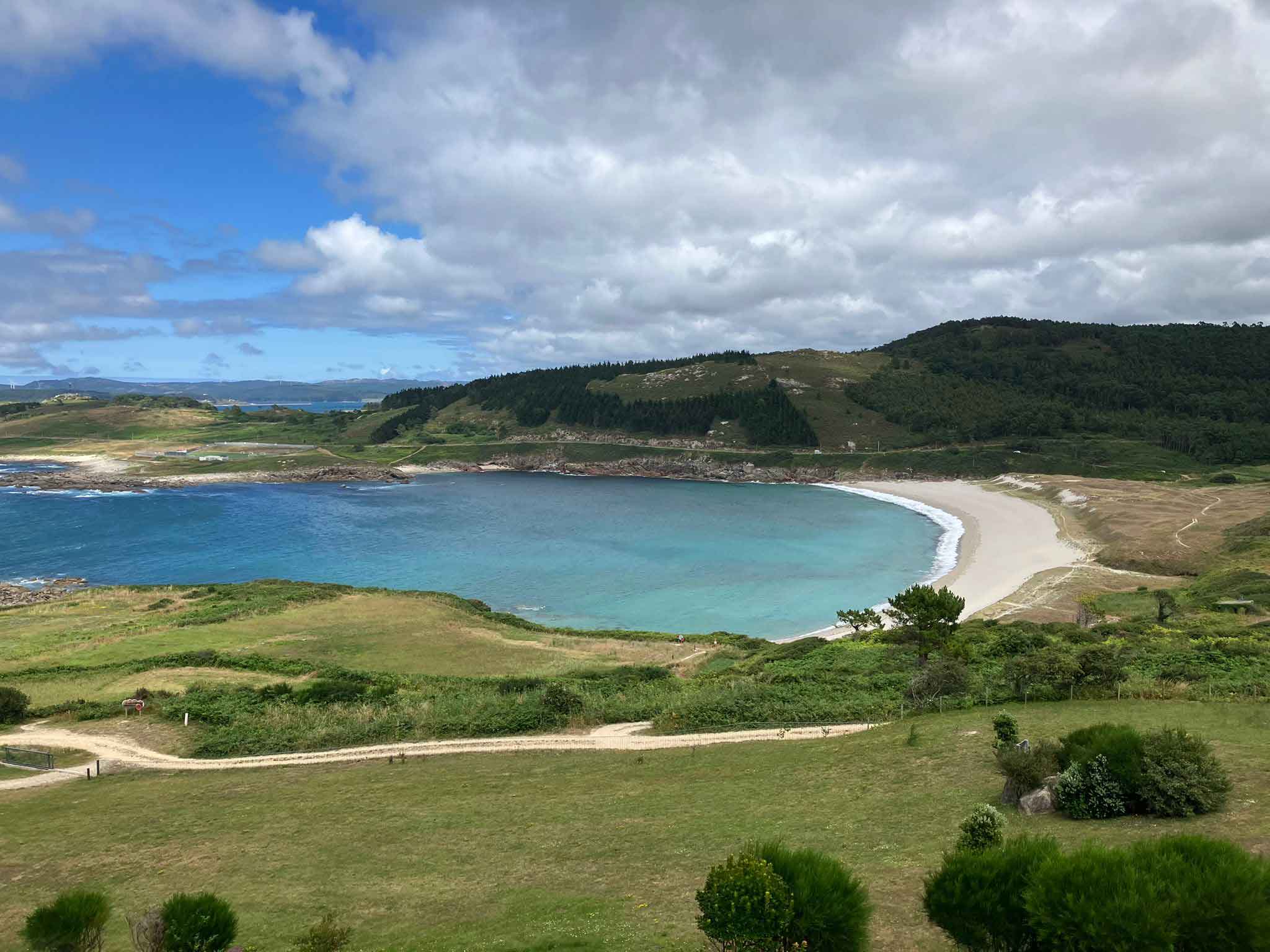
Our journey here should hopefully be less eventful and you will soon be arriving at the Parador Costa da Morte for lunch overlooking an attractive stretch of white sandy beach that arcs round to the little village of Muxía, perched on a rocky outcrop. This was Spain’s 98th Parador when it opened in 2020 and boasts a unique modern design built into the green hillside.

Suitably fed and watered, we leave the coast behind us and turn inland to reach the day’s final and longest Regularity, which includes a good variety of roads (and tracks) as it takes us through a contrasting landscape combining fertile farmland with forests of pine and eucalyptus. With this challenge behind us, it is then an easy run into Santiago and all crews should be back at the hotel by 16:00 allowing time to head out into the nearby city centre. One unique activity that might appeal is a rooftop tour of the Cathedral and the Portico of Glory before heading into the old town for dinner.

The fourth day sees us begin our return journey back east. We leave Santiago on a 30-km ‘motorway run’ which gets some early distance under our belts on this longer day. Our overall plans for this day’s route have had to change after the scheduled morning test venue informed us that the circuit could be unavailable due to development works. So on the recce we had to switch to an alternative plan…

This sees competition begin with a decent-length regularity over the Montes de Bocelo before a pleasant cross-country run brings us to the morning refreshments stop in Outeiro de Rei. From there, we skirt north of Lugo and begin to see hills rising ahead of us and that is where we are headed next for the second Regularity that climbs up onto one of the wind turbine adorned ridges that have come to dominate the skyline of North West Spain. Only a short distance away is our lunch halt in a traditional roadside Guest House and Hostel boasting a large dining room, well used to feeding hungry Camino peregrinos and motorists alike.

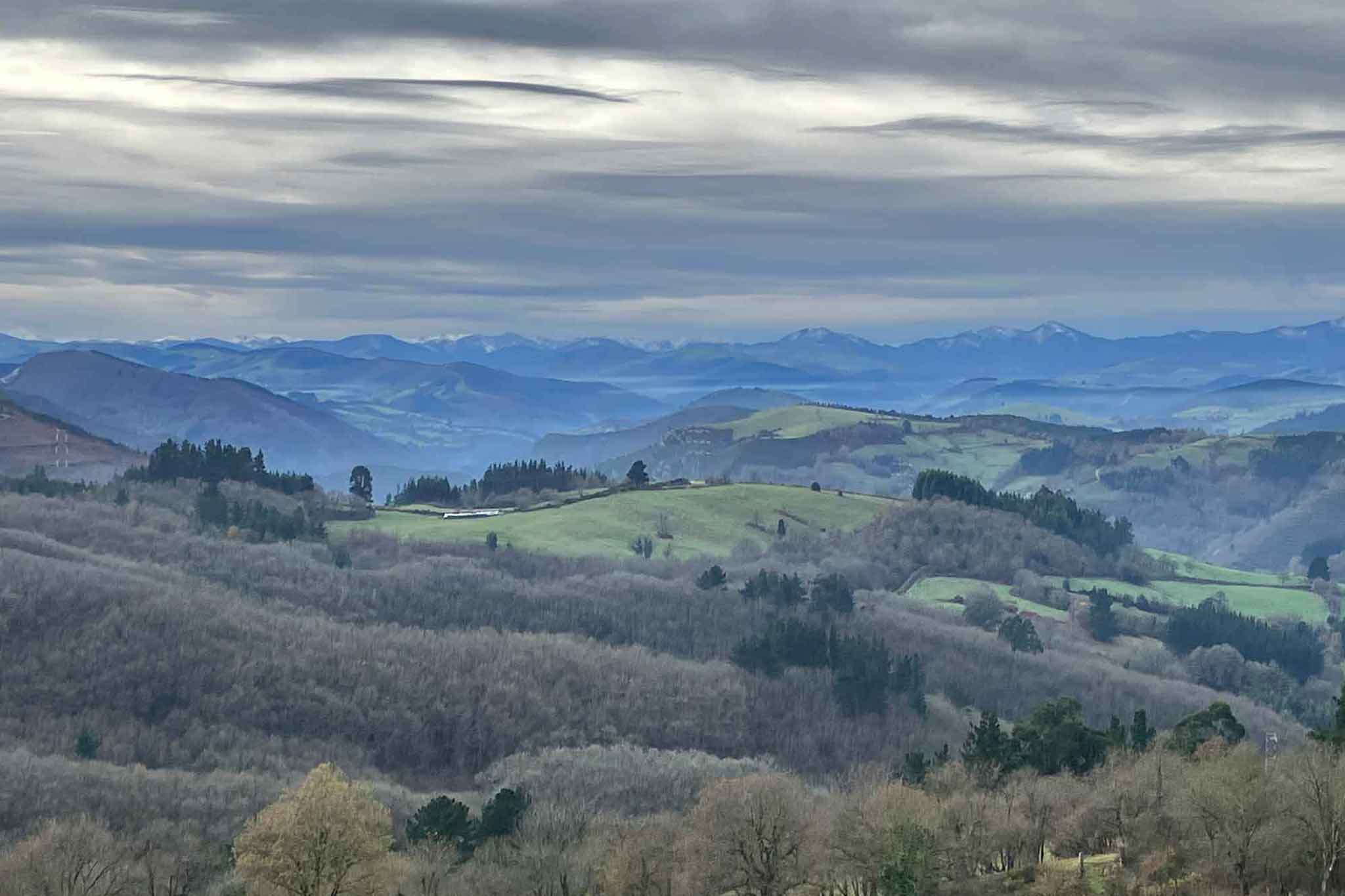
In the afternoon, sweeping roads take us into increasingly vertiginous landscapes and past impressive constructions holding back the waters of the River Navia before we climb even higher into the Principality of Asturias for the next Regularity. This is a short-sharp affair dropping into the valley before quickly climbing up again to join high ridge roads where the views are first class with a series of high mountain peaks stretching off towards the hazy horizon.

Having returned to the valley at Polla da Allende, we are soon into another Regularity that cuts south east across a lower altitude ridge to reach Cangas del Narcea. Although our overnight hotel is close by, we are not quite done for the day as we have the final Test to tackle on a small circuit a short drive away to the south to round off the day’s competition.

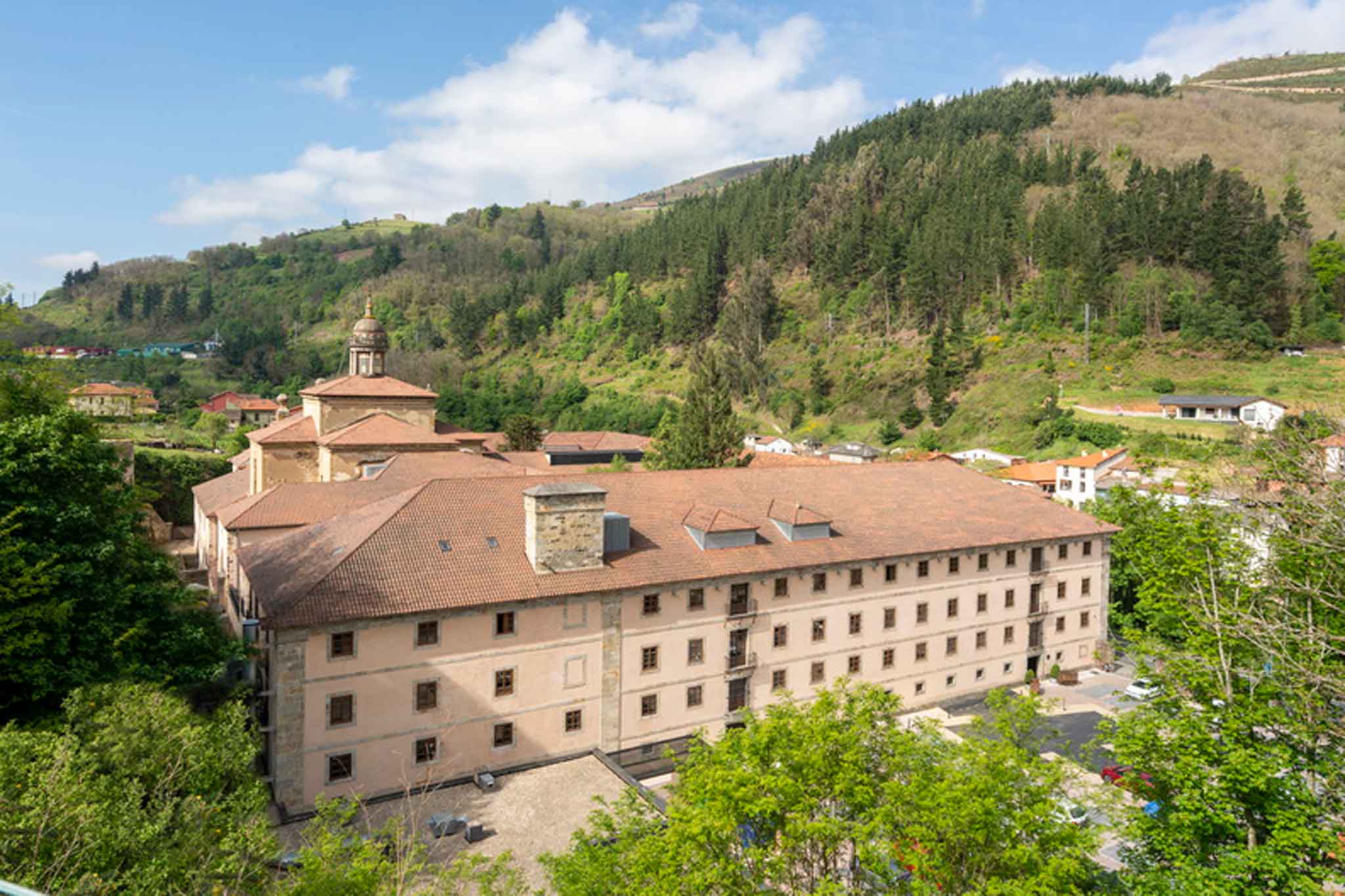
We then return north through Cangas to reach the Parador de Corias. This is housed in the monastery of San Juan Bautista, which was built between 1022 and 1044 and later enlarged in 1744 to become the second largest in Spain, surpassed only by El Escorial near Madrid. Actually, the building is sometimes referred to as the ‘Escorial de Asturias’ because of its impressive architecture. It is the only Parador where guests share the space with the previous tenants, as a community of Dominican monks still manage the adjoining church.

Our evening meal here is preceded by a chance to enjoy one of the most popular Asturian food and drink products, served in the uniquely traditional way…

Leaving Corias on Day Five, we head north into the ‘farming country’ around Tineo where a network of country lanes play host to the first Regularity as well as providing good views of the higher mountains to the south and east. And it is this steeper landscape that we visit next as we take a loop south to bypass our start location in Las Caldas and more importantly the built up areas around Oviedo.

We are destined for the Langreo Raceway, an interesting driver training venue run by the local motor club. This venue will host a challenging Test taking in multiple levels and gradient changes, which will be tackled before and after lunch served on-site. From Langreo, we then have a small amount of urban motoring to contend with before we return to more rural surroundings north of Nava.

The next Regularity includes a good variety of roads as it wends its way between small communities and along the way gives us our first glimpses of the Picos de Europa in the distance. And these occasional views continue as we drive east towards Cangas de Onis – famous as the first capital of the Kingdom of Asturias, where King Pelagius started the Reconquista. Cangas is now a bustling tourist town, used as a base for visiting the Picos as well as the nearby Covadonga Lakes and Sanctuary.

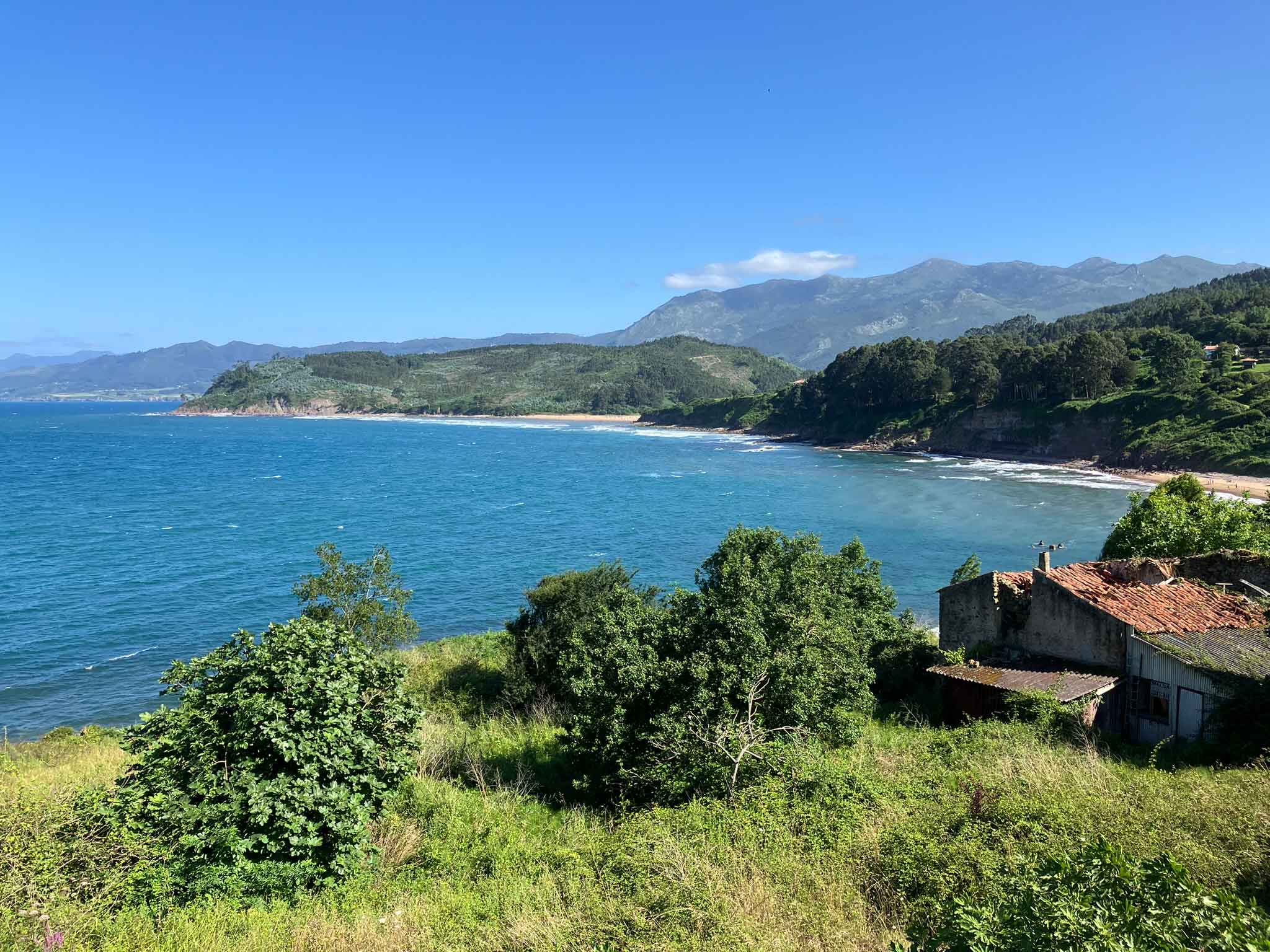
Having stopped for refreshments in a roadside restaurant, our final action for the day is in the  form of a twisty Regularity and subsequent scenic drive through the steeply sided Sierras de la Cubeta and de Peña Villa. The descent from these hills brings us to the coast and it is then just a short drive to the small village of La Franca. Our hotel here features a ‘rustic villa’ style and has a unique location overlooking a white sandy beach dramatically sandwiched between rocky cliffs.

After a night by the sea, the final day gets under way with an early crossing into Cantabria and a scenic drive through the hills near the Cueva de El Soplao – an extensive cave network that is now a popular tourist destination. These twisty roads also often feature on La Vuelta when it visits this region.

Returning to the coast, we briefly join the motorway to reach Karting La Roca, a well-established local motorsport venue run by WRC driver Dani Sordo’s family which hosts two good Tests for us. Suitably into the groove, it is back onto the motorway to bypass the busy conurbation of Torrelavega before turning south towards the heart of the Cantabrian Mountains. The first Regularity soon follows and features a set of interesting roads, well off the beaten tourist trail.

Then we cross the ridge at El Portillón to reach the Valles Pasiegos – a popular tourist region encompassing the valleys of the Pas and Miera rivers that are said to be the epitome of ‘Green Cantabria’. These basins and the surrounding pastures have a long history of transhumance farming. Historical and artistic heritage are also important in the region with a number of elaborately decorated country houses dotted round the agrarian landscape. And perhaps the area is best known throughout Spain for its sweet treats, namely the Sobao pasiego (a sponge cake) and the Quesada pasiega (a cheesecake-like dessert enjoyed on special occasions).

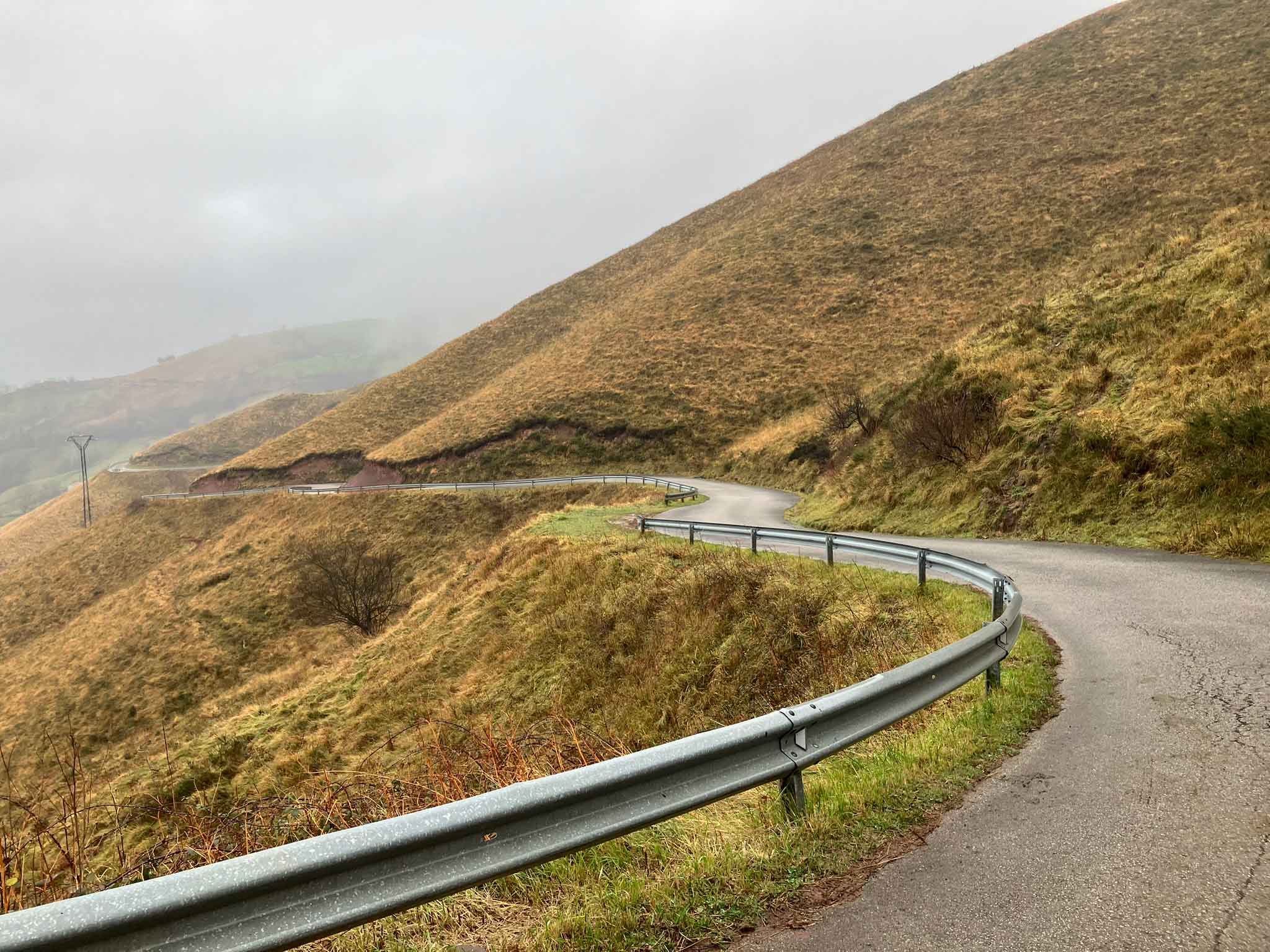
Speaking of food, we stop for late morning snacks here before we climb higher into the hills on a lonely tarmac road that is reverting to nature in places. This transports us up onto an exposed ridge with first class vistas of the main rugged Cantabrian peaks, that are somewhat reminiscent of those in parts of the British Isles. After this scenic interlude, it is back to the competition with a second Regularity on roads that have regularly featured on Spanish Championship rallies over the years.

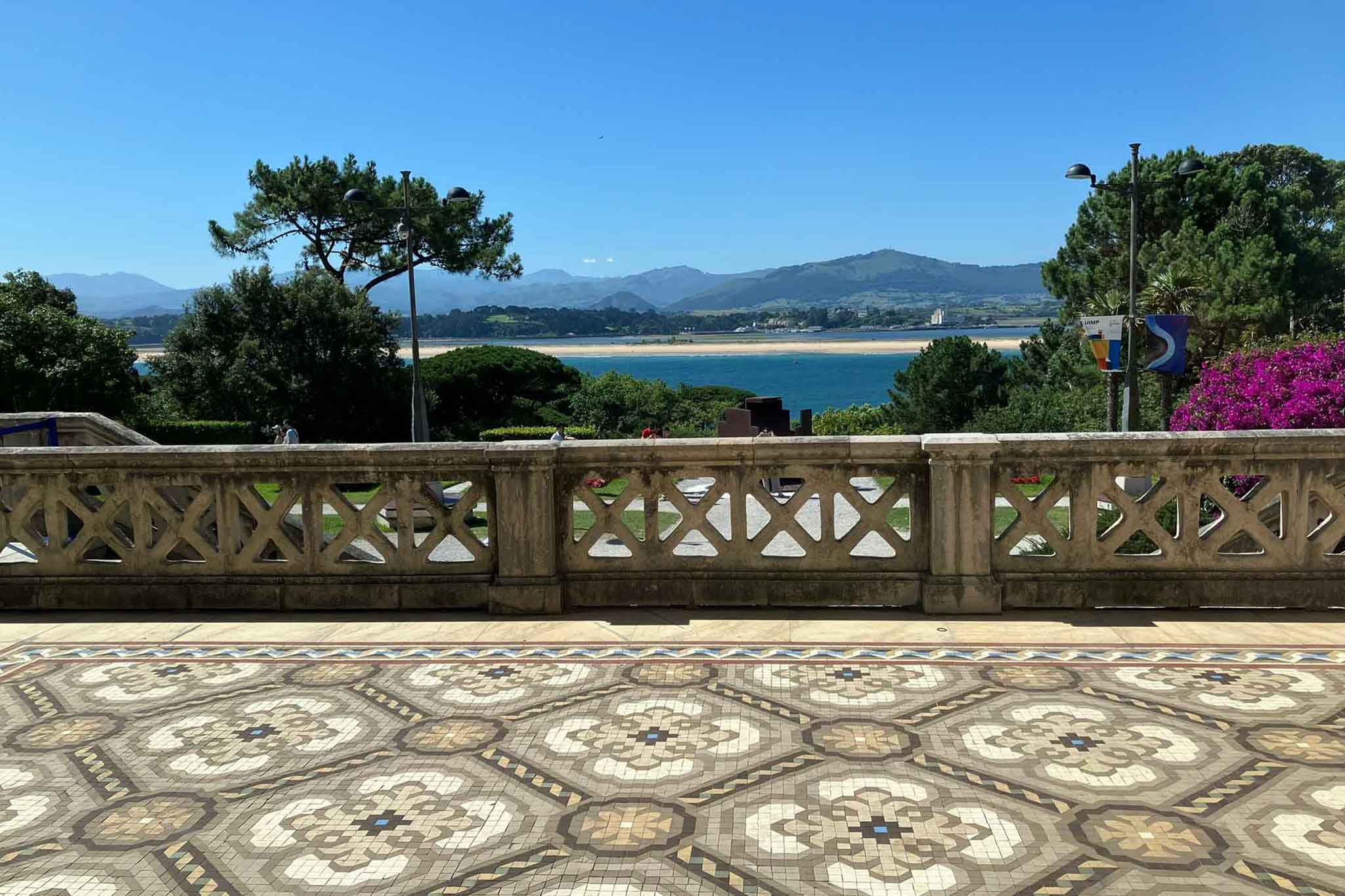
With this final competitive section successfully navigated, crews can then relax with a straightforward descent from the hills and onto the motorway which easily transports us around the main centre of Santander directly to the upmarket El Sardinero beachfront area. Sitting on a windswept headland at the far end of this sandy expanse is the Palacio de la Magdalena. This former royal summer palace, built between 1908 and 1912, hosts the official finish point for the event.

Having been flagged through the finish arch in front of this impressive building, we will have a chance to enjoy a celebratory drink and canapés inside the palace by generous permission of the city council. Here, you can enjoy the eclectic interior design, combining English, French, and regional architectural styles as well as admiring the fine paintings that adorn its walls.

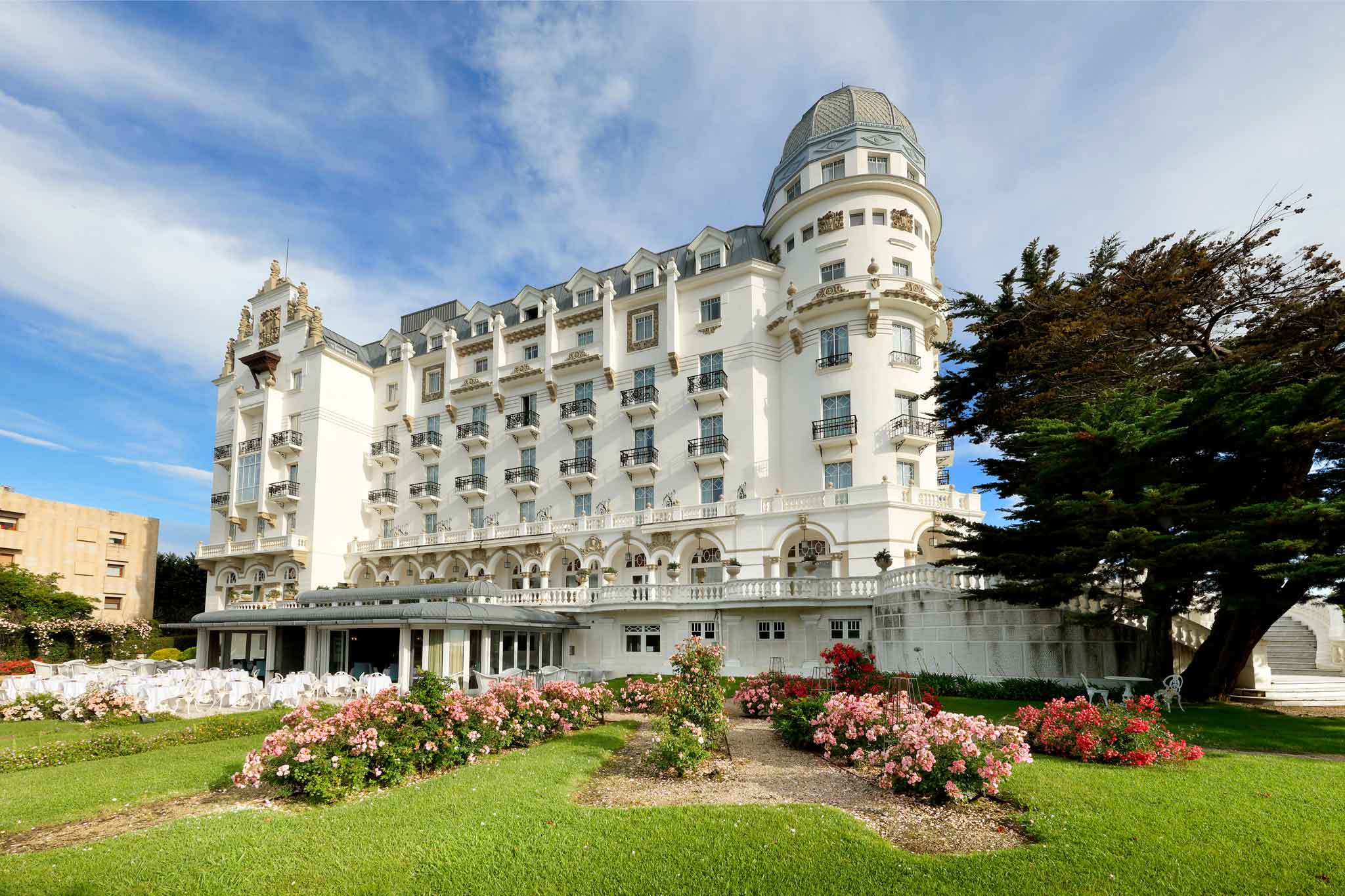
A short distance away is the equally regal and historic 5* Eurostars Hotel Real – our home for the night and where we will enjoy the Prizegiving Dinner in the evening. The hotel first opened in 1917 to host the entourage of King Alfonso XIII during his summer vacations at the Palacio. Known locally as the ‘white lady’ due to its elevated and striking appearance overlooking the Bay of Santander, this Belle Époque landmark survived the Civil War and remains one of the most emblematic buildings in Santander.

image